Small businesses face a security challenge that rarely gets discussed honestly. The assumption is that professional protection is reserved for large corporations with dedicated budgets, yet in reality, small and independent businesses are disproportionately targeted by opportunistic crime, internal theft, and after-hours incidents. The good news is that cost-effective security solutions exist that deliver genuine protection without requiring enterprise-level spending.
This guide walks through what actually works, what you are likely overpaying for, and how to make smarter decisions around protecting your premises, assets, and people.
Why Small Businesses Cannot Afford to Skip Security
The financial impact of a break-in, theft, or undetected alarm activation on a small business can be devastating. Insurance premiums rise, stock is lost, and in some cases, the operational disruption causes more damage than the incident itself. Many small business owners invest in basic CCTV cameras or a standard alarm panel and consider themselves covered. However, equipment alone is not a security strategy.
True cost-effective security solutions address three things simultaneously: deterrence, detection, and response. If one of those three is missing, you have a gap. A camera that records but triggers no response is deterrence at best. An alarm that rings and nobody attends is a theatre. Sustainable protection combines the right physical presence with professional services that actually act when something goes wrong.
Understanding What You Are Really Paying For
Before choosing any security provider or package, it helps to understand the cost structure behind professional security services. The cheapest quote is rarely the most economical choice over a 12-month period. Hidden call-out charges, contract lock-ins, and poor response times all add up in ways the initial price does not reflect.
The most practical, cost-effective security solutions for small businesses tend to bundle services rather than price them separately. A provider that offers monitored alarm systems, physical patrols, and emergency response under one arrangement almost always delivers better value than three separate vendors loosely coordinated together.
Corporate & Office Security Services Scaled for Smaller Operations
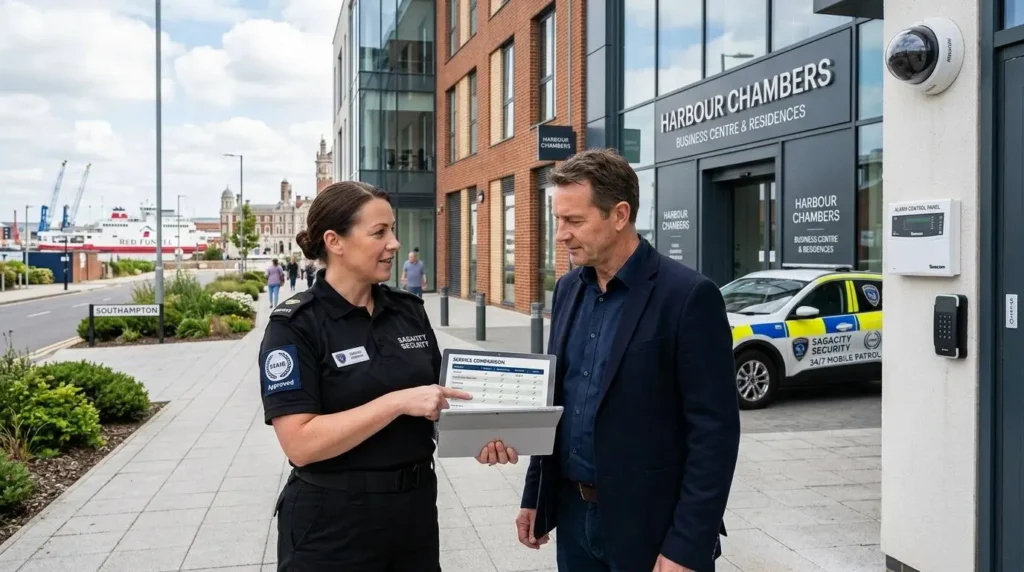
One of the biggest misconceptions small business owners carry is that Corporate & Office Security Services are built exclusively for large organisations with open-plan floors and hundreds of employees. In practice, the same principles scale down very effectively. Access control, visitor management, and staff safety protocols that protect a 500-person headquarters can be adapted intelligently for a 20-person office or a standalone retail unit.
When applied at a smaller scale, cost-effective security solutions for offices typically focus on controlling entry points, managing after-hours access, and creating a visible deterrent presence during business hours. This does not require a full-time on-site guard for most small businesses. A combination of monitored access control, periodic mobile patrols, and a proper alarm response arrangement covers the vast majority of risk scenarios at a fraction of the cost.
The Real Value of Alarm Response and Key Holding
Most small business owners have experienced the inconvenience of being called at 2am because their alarm triggered. You travel to the premises, find nothing amiss, reset the panel, and lose three hours of sleep. Multiply that across a year and the hidden cost in time, stress, and disruption is significant.
Key Holding & Alarm Responsive Services resolve this directly. A professional security company holds a set of keys to your premises and responds on your behalf when an alarm activates. This means a trained operative attends, assesses the situation, contacts you only if there is a genuine issue, and secures the building if required. For small businesses in particular, this is one of the most cost-effective security solutions available because it removes a significant burden from the business owner while ensuring every alarm activation receives a proper response.
Beyond convenience, there is a legal and insurance dimension worth noting. Insurers increasingly require evidence of monitored response arrangements for commercial properties. Having a documented key-holding contract can directly influence your premium and your ability to make a successful claim after an incident.
Mobile Patrols as a Budget-Friendly Deterrent
Hiring a static guard is a high cost. For most small businesses, it is also unnecessary. Mobile patrol services offer a far more cost-effective security solution by providing a visible security presence across multiple sites within a single patrol route. Your premises receive regular check visits at unpredictable intervals throughout the night or during vulnerable periods, which is actually more effective as a deterrent than a guard who follows a predictable pattern.
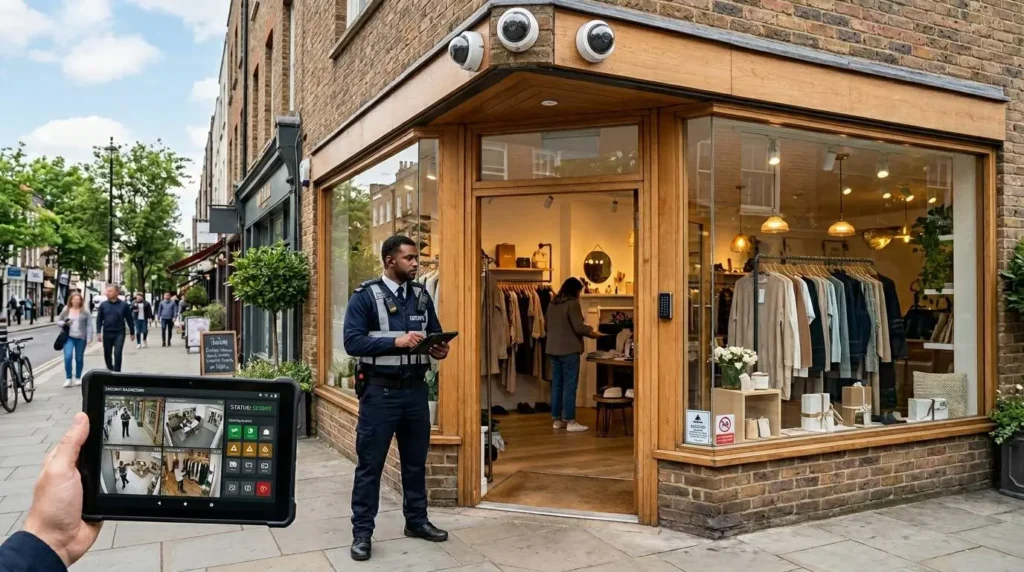
Research consistently shows that opportunistic criminals select targets based on perceived risk. A business with visible patrol activity, marked security vehicles visiting regularly, and alarm signage is a significantly lower-value target than one with none of those indicators. You get the deterrent benefit of a physical security presence without the full-time staffing cost.
Technology That Delivers Without Overspending
Security technology has become genuinely affordable for smaller operations in recent years. HD CCTV systems with remote monitoring capability, smart access control that integrates with mobile devices, and cloud-based alarm management platforms are now accessible at price points that suit small business budgets. However, technology without professional oversight is only half the picture.
The most cost-effective security solutions pair technology with human response capacity. Remote CCTV monitoring, for example, is only valuable if someone is actually watching and able to dispatch a response when needed. Buying cameras and installing them without a monitoring arrangement means you are collecting footage of incidents rather than preventing them.
When evaluating technology options, focus on what triggers action rather than what records events. Prevention and interruption deliver far better returns than documentation alone.
Building a Security Plan That Matches Your Risk Profile
Every small business has a slightly different risk profile depending on sector, location, opening hours, and the nature of what is being protected. A cash-heavy retail business in a busy high street has different vulnerabilities to a small professional services office in a business park. Effective and cost-effective security solutions are always shaped around the specific risk rather than applied generically.
A good security provider will carry out a site risk assessment before recommending services. This does not need to be an expensive or lengthy process, but it should produce a written overview of identified risks and a clear rationale for the recommended measures. If a provider skips this step and goes straight to a package quote, that is worth noting.
Prioritise the risks that would cause the most serious operational or financial damage. Focus your initial investment on those. Additional layers can be added progressively as budget allows, and many providers offer flexible arrangements that scale as your business grows.
Common Mistakes Small Businesses Make With Security Budgets
Spending on visible equipment and ignoring response planning is the single most common mistake. A business might invest several thousand pounds in CCTV infrastructure and then have no arrangement for what happens when something is actually detected. This is not a security strategy; it is a reactive documentation system.
Another frequent issue is renewing with an existing provider out of habit rather than reviewing whether the arrangement still fits the current risk profile. Business premises change, neighbouring businesses change, and crime patterns shift. A security review every 12 months is a reasonable habit for any small business and often surfaces opportunities to either improve coverage or reduce costs without reducing protection.
Choosing purely on price without checking response time guarantees is also a significant risk. A provider that offers a low monthly fee but guarantees a response within four hours is not genuinely covering your exposure. For small businesses in particular, the first 30 to 60 minutes after an incident are critical. Your security provider’s response capacity in that window matters far more than the headline cost.
What to Ask Before Signing a Security Contract
Before committing to any arrangement, there are several things worth clarifying in writing. What is the guaranteed response time for an alarm activation? Are call-out charges included in the monthly fee or billed separately? What accreditations does the company hold? What happens if a patrol is missed?
Reputable providers of cost-effective security solutions for small businesses welcome these questions. Accreditation with the Security Industry Authority and membership of the British Security Industry Association are both indicators of professional standards. Neither guarantees service quality on its own, but they do reflect a minimum commitment to regulatory compliance and industry best practice.
Frequently Asked Questions
What are the most cost-effective security solutions for a small retail business?
For most small retail operations, the strongest combination is a monitored alarm system paired with a key-holding and alarm-response arrangement, supplemented by mobile patrols during overnight hours. This removes the need for static guarding while ensuring that every alarm activation receives a trained physical response. Adding visible CCTV with remote monitoring strengthens the deterrent significantly without adding major ongoing costs.
Do small businesses really need key-holding services, or is a standard alarm enough?
A standard alarm without a response arrangement means the responsibility for attending falls on the business owner or a nominated keyholder. This creates personal safety risks, operational disruption, and insurance complications. Key holding services transfer that responsibility to trained professionals who respond at any hour, assess the situation properly, and only escalate to the owner when genuinely needed. For most small business owners, the time and stress saving alone justifies the cost.
How can I reduce my business security costs without reducing protection?
The most effective approach is to consolidate services with a single provider who can offer bundled pricing across alarm response, key holding, and patrols. Review your current arrangements for duplicate services or technology you are paying for but not using effectively. A proper risk assessment often reveals that some measures can be scaled back in lower-risk areas while investment is redirected to the vulnerabilities that actually carry the most exposure.
Are mobile security patrols worth it for a small business premises?
Yes, particularly for businesses in locations that experience higher levels of opportunistic crime or that hold valuable stock overnight. Mobile patrols provide a visible deterrent presence at a fraction of the cost of static guarding and are considerably more effective than unmonitored CCTV for preventing incidents rather than simply recording them. For most small businesses, two or three patrol visits per night during overnight hours delivers meaningful risk reduction at a manageable monthly cost.