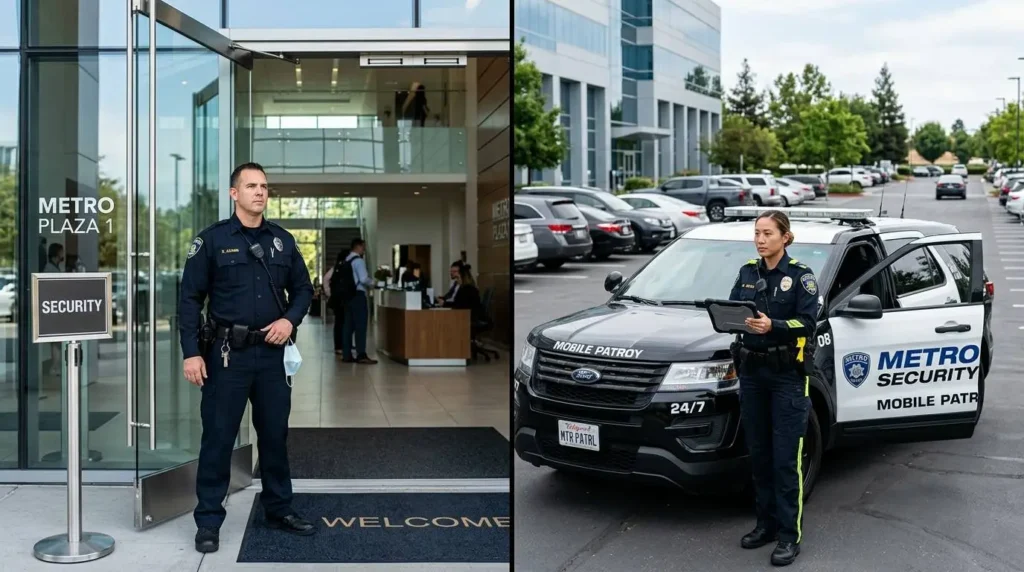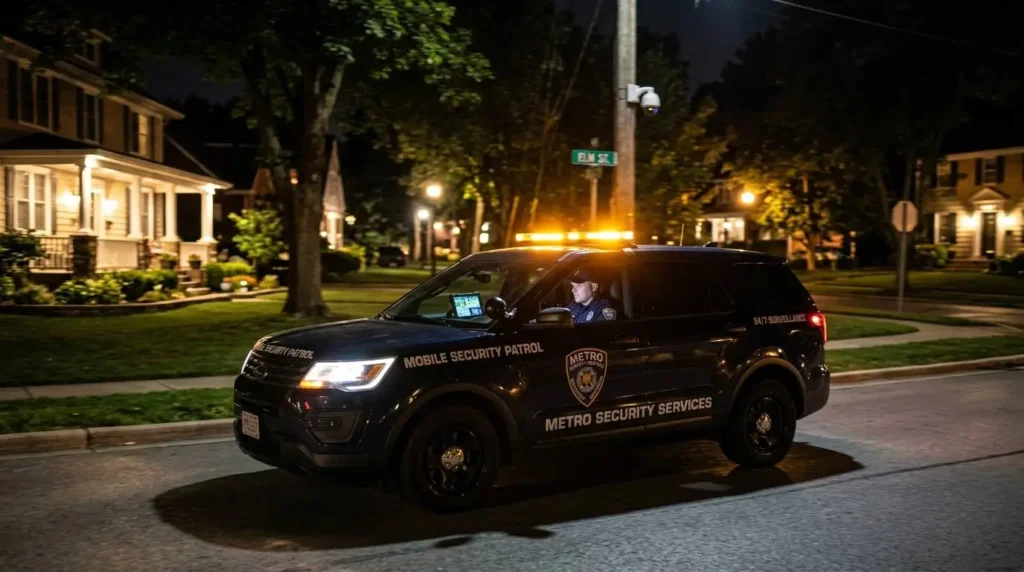
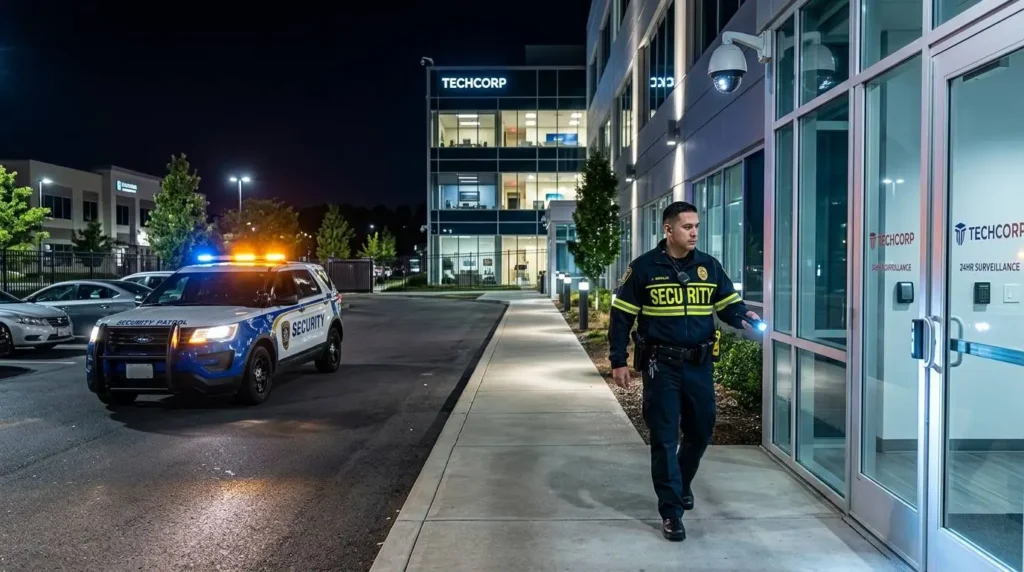
A commercial break-in rarely announces itself. Most happen in the small hours, in blind spots, during the window between a guard’s last check and the next scheduled visit. For many business owners, the assumption that a fixed guard presence or a CCTV system is enough has cost them dearly. What those setups lack is unpredictability, and that is precisely what mobile security patrols for business are built to deliver.
This is not about replacing one security measure with another. It is about understanding where the gaps are and closing them with something that actually moves.
Why Static Guards Alone Are No Longer Enough
Fixed-point security has its place. A manned entrance or reception desk communicates presence, handles access control, and provides an immediate response at a single location. But a static guard cannot be in two places at once, and determined intruders know it.
Over time, any predictable pattern becomes a vulnerability. If a guard walks the same route at the same time each night, it stops functioning as a deterrent. Mobile security patrols for business solve this by design. Patrol routes are varied, visit times are randomised, and the same site rarely receives exactly the same treatment two nights in a row. That unpredictability is the point.
There is also a cost argument. Hiring a dedicated static guard for every building, gate, and perimeter is simply not viable for most businesses. A mobile patrol unit covers multiple client sites in a single shift, giving each site meaningful attention without the overhead of a full-time on-site presence.
What Mobile Security Patrols Actually Do
The term gets used loosely, so it is worth being specific. A mobile patrol is not a van doing a slow drive-by. Done properly, it involves licensed officers physically leaving the vehicle, conducting internal and external checks, testing access points, logging observations, and looking for anything out of the ordinary. Every visit is documented, often with timestamped GPS records and photographic evidence available to the client on request.
Officers also act as a direct liaison with emergency services if something is found. They do not stand back and wait. They assess the situation, secure the scene where safe to do so, and coordinate with police or fire response. For businesses operating overnight or on weekends, that rapid, informed presence makes a measurable difference to how quickly an incident gets resolved.
Mobile security patrols for business also carry a psychological weight. The presence of a marked patrol vehicle at irregular intervals tells opportunistic criminals that the site is actively monitored. That alone reduces targeting. Research in crime prevention consistently shows that perceived detection risk is one of the strongest deterrents available.
Industries That Benefit Most and Why
Construction sites are among the most frequently targeted properties in the UK. Plant machinery, copper wire, tools, and building materials are easy to move and hard to trace. A site that goes unwatched from Friday evening until Monday morning is an obvious target. Mobile security patrols for business in this sector typically involve perimeter checks, plant counts, and access point verification.
Retail parks and industrial estates share a similar profile, large, spread out, and largely unoccupied at night. A single patrol covering the whole estate provides reassurance to multiple tenants while keeping costs proportional.
The need is equally clear in warehouse & logistics services. High-value stock, loading bays that stay open late, and high vehicle movement make these sites complex to secure with static measures alone. Patrol officers familiar with the layout and the usual patterns of activity are well-positioned to spot what does not belong.
Office complexes, healthcare premises, and hospitality venues each carry their own risk profiles. The common factor is that mobile security patrols for business offer a scalable, adaptable solution that static alternatives simply cannot.
How Patrols Integrate With Alarm Response
One of the more underappreciated advantages of mobile patrols is how naturally they fold into a broader security operation. When an alarm triggers at 2 am, someone has to attend. Sending a lone member of staff, often a manager with no security training, to check an unlit commercial property is not a safe or practical solution. It also exposes employers to liability questions they may not have considered.
Professional key holding & alarm response services resolve this cleanly. The security company holds a set of keys and the authority to enter the premises on the client’s behalf. When an alarm fires, a patrol officer already on the road attends, assesses, and reports. If it is a false activation, a faulty sensor, or a door left ajar, the officer resets and secures. If there is a genuine cause for concern, the appropriate services are called, and the scene is managed professionally.
The same officers conducting nightly patrols are often the ones responding to alarms, which means they already know the site. They know where the back entrance is, which sensors are prone to false triggers, and who the on-call contact is. That continuity matters when seconds count.
What to Look for When Choosing a Mobile Patrol Provider
Not all providers operate to the same standard, and the differences matter more than most clients realise before something goes wrong.
Start with licensing. Every officer should hold a current SIA (Security Industry Authority) licence, and the company itself should be Approved Contractor Scheme (ACS) accredited. This is not a formality. It is the baseline assurance that staff have been vetted, trained, and hold the legal authority to carry out the role. Ask to see documentation.
GPS-tracked vehicles are standard with reputable providers and give clients verifiable records of every patrol visit, time, location, and duration. If a provider cannot offer this, that is worth questioning. Similarly, digital patrol reports should be available after each shift. These logs carry real value: for insurance claims, for incident investigations, and as a deterrent in themselves.
Response time guarantees matter for alarm attendance specifically. A patrol unit already in the area will reach a site far faster than a central response team dispatched from a fixed location. Ask what the contractual response time is and whether it varies by time of night.
Finally, check whether the company subcontracts overnight cover. Some providers staff their own days and hand nights to a third party. Mobile security patrols for business should be delivered by the same trained, briefed team throughout; consistency in who is checking your site directly affects quality.
The Business Case: Cost vs. Risk
Security spend is often treated as a grudge purchase until something happens. The calculation looks different when you factor in what a single incident actually costs. A break-in at a commercial property typically involves not just the loss itself, but business interruption, insurance excess, staff time spent managing the aftermath, and potential reputational damage depending on what data or client property is affected.
UK insurers are increasingly attentive to what security measures are in place. Documented patrol visits, alarm response arrangements, and SIA-licensed officers on site can influence premium calculations and policy terms. Some commercial policies specifically require professional security patrols for high-value stock environments. That makes mobile security patrols for business not just a protective measure but a compliance consideration in certain sectors.
There is also the deterrent value, which does not show up in incident reports precisely because it works. Sites that are visibly and consistently patrolled are passed over in favour of easier targets. That is a cost saving that never generates a receipt but is real nonetheless.
Mobile security patrols for business are not a luxury reserved for large corporations. For any commercial operation with after-hours exposure, stock, equipment, client data, or staff working late, a patrol arrangement is one of the most cost-effective layers of protection available.
If you are considering what the right level of cover looks like for your premises, speaking with a professional security team is the most practical starting point. A proper site assessment will identify the specific risks and the most proportionate response.
Frequently Asked Questions
What is the difference between mobile security patrols and static security guards?
A static security guard is stationed at a fixed point and provides continuous presence at one location. Mobile security patrols for business involve licensed officers moving between multiple sites on unpredictable schedules, conducting physical checks and documenting conditions at each visit. Static guards offer depth at a single point; mobile patrols offer breadth and the deterrent effect of unpredictability across a wider area.
How often do mobile security patrols visit a site?
Visit frequency depends on the contract and the risk profile of the site. Most businesses opt for between two and five patrol visits per night, spaced at irregular intervals. The randomised timing is deliberate, it prevents anyone from predicting when the site will and will not be attended, which strengthens the deterrent effect considerably.
Are mobile security patrols worth it for small businesses?
Yes, and often more so than larger operations with dedicated on-site teams. Mobile security patrols for business are structured to serve multiple clients from a single patrol unit, which keeps costs proportionate. For a small business with after-hours premises, stock, or equipment, a patrol arrangement provides professional, documented oversight that would otherwise be unaffordable on a static guard model.
Do mobile patrol officers carry out alarm response as well?
In most cases, yes. Many security providers integrate alarm response into the same mobile patrol operation, meaning the officer who patrols your site is also the one who attends when an alarm activates. This continuity is a genuine operational advantage, the officer knows the site, knows the access points, and can assess the situation with context that a first-time responder would not have.