Every year, thousands of property owners discover their security gaps the hard way, after a break-in, an insurance claim, or an incident that could have been prevented. The frustrating part is that most of these situations showed warning signs well before anything happened. Recognising the signs your property needs security early is what separates proactive owners from reactive ones. Whether you manage a commercial building, a residential complex, or an active worksite, this post walks you through five clear indicators that your current setup is no longer enough.
1. You’ve Had Repeated After-Hours Incidents
If your property has experienced vandalism, trespassing, or theft more than once, especially outside business hours, that pattern is one of the most direct signs your property needs security coverage beyond standard measures. A single incident can be written off as bad luck. A recurring pattern points to a structural vulnerability.
After-hours incidents often happen because criminals observe properties over time. They notice when your site goes dark, when staff leave, and when there are no visible deterrents. Vandalism patterns in particular tend to escalate when there’s no consequence for the initial act. The cost of cleaning graffiti or replacing damaged equipment adds up quickly, but the bigger risk is what comes after: theft, liability claims, or injury to unauthorised individuals on your premises. Round-the-clock coverage closes that window entirely.
2. Your Site Has Perimeter Vulnerabilities and Blind Spots
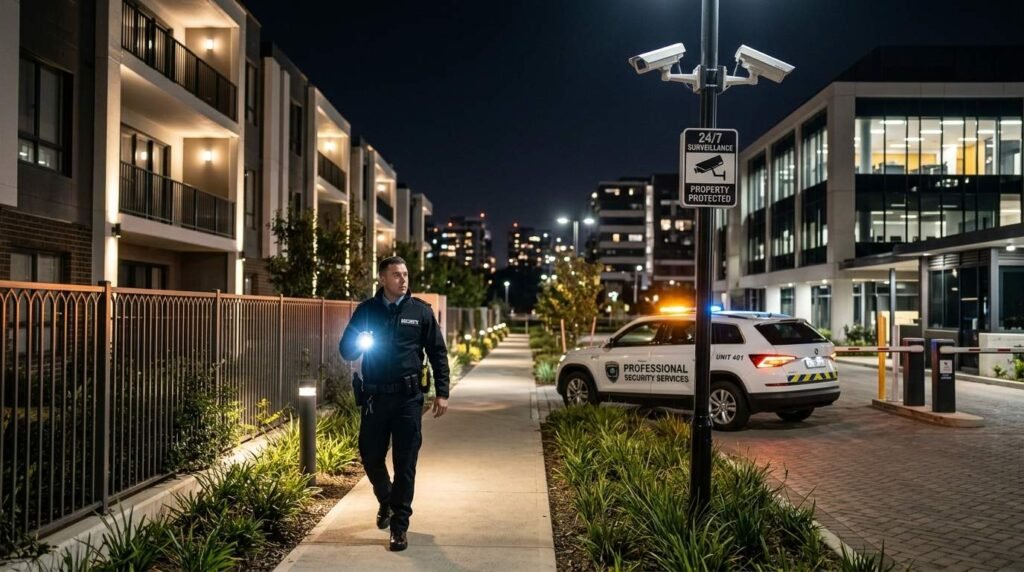
Walk your property at night. Are there areas where someone could enter without being seen? Gaps in fencing, unlit corners, poorly positioned cameras, or unmanned entry points are all signs your property needs security attention. Perimeter vulnerability is one of the most overlooked risk factors because it doesn’t feel urgent until it is.
Blind spots in surveillance are particularly costly. A camera system that covers 80% of your grounds still leaves 20% exposed, and experienced opportunists know how to find that 20%. Beyond cameras, the physical layout of a property can create natural hiding spots near loading bays, stairwells, or secondary entrances. A proper security assessment maps these gaps and addresses them before they’re exploited. Premises liability laws in most jurisdictions also hold property owners accountable for foreseeable harm, which makes unaddressed vulnerabilities a legal exposure as much as a physical one.
3. You’re Managing High-Value Assets or Sensitive Operations
High-value asset exposure is a straightforward risk multiplier. The more valuable what you’re protecting, the more attractive your property becomes to organised theft or targeted intrusion. This applies directly in corporate & office security environments, where server rooms, executive floors, document storage, and reception areas all carry risks that standard access control alone won’t mitigate.
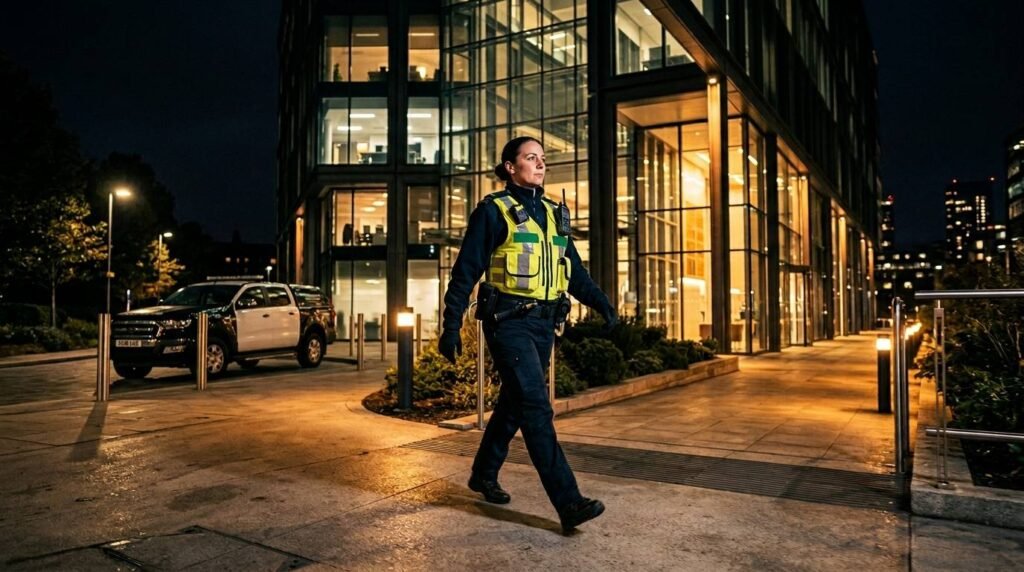
Tailgating risks are especially common in busy office buildings where staff prop doors open or let colleagues through without scanning credentials. One unauthorised entry during peak hours can compromise an entire floor. Round-the-clock security addresses this through manned presence that cameras and card readers cannot replicate. A trained officer notices behaviour that no algorithm flags: someone loitering near a restricted area, an unfamiliar face asking too many questions, a door that’s been wedged open on a floor that should be empty after 6 pm.
4. Your Site Has Irregular Activity Patterns That Create Security Gaps
Shift changes, weekend downtime, late-night deliveries, and seasonal closures all create predictable windows of reduced oversight. These transition points are when most incidents occur. If your operational schedule creates periods where your site is technically active but effectively unsupervised, that’s one of the clearer signs your property needs security coverage designed around your specific timetable.
Construction site security requirements illustrate this well. Active worksites hold significant material value, plant machinery, copper wiring, tools, and building materials, all of which are attractive targets during weekends or project pauses. Lone worker safety is another concern during early-morning or late-evening shifts when crew numbers are low. A 24/7 security presence doesn’t just deter theft; it creates a verifiable record of site activity, supports duty of care obligations to staff, and significantly reduces insurance exposure for project managers and principal contractors.
5. Your Insurance Costs Are Rising, or Claims Are Being Scrutinised
This one tends to surprise people, but insurers look closely at documented security gaps when assessing claims. If your premiums have increased, a claim has been disputed, or your insurer has requested evidence of security controls, those are financial signs your property needs security upgrades. Insurers price risk. A property with no manned presence, outdated CCTV, or a history of incidents will cost more to cover, and in some cases, coverage can be limited or voided if reasonable security measures weren’t in place.
The difference between deterrence and response is what insurers and courts evaluate. Having a plan to respond after an incident is not the same as having measures that prevent one. Proactive, round-the-clock coverage reduces the probability of claims occurring, provides documented evidence of security diligence, and in many cases directly lowers premium costs over time. That makes it a financial decision as much as a safety one.
Conclusion
Most security failures don’t happen overnight; they follow a trail of ignored warning signs. If any of the situations above sound familiar, they’re likely signs your property needs security that goes beyond what’s currently in place. The question worth asking isn’t whether you can afford round-the-clock coverage. It’s what a gap in that coverage has already cost you, and what it might cost next time. Start with an honest assessment of your current setup and work from there.
Frequently Asked Questions
What are the most common signs your property needs security monitoring?
The most common indicators include repeated incidents of vandalism or trespassing, perimeter gaps that allow unauthorised access, high-value assets stored on-site, and irregular operating hours that leave the property unsupervised. If your insurance premiums have increased or a claim has been questioned, that’s also a strong signal. Recognising these signs that your property needs security early allows you to address risks before they escalate into serious incidents or liability situations.
Is 24/7 security worth the cost for small or mid-size properties?
It depends on what’s at risk and what’s already happened. For properties with recurring incidents, significant asset value, or after-hours operations, round-the-clock coverage typically reduces costs over time through lower insurance premiums, prevented losses, and reduced liability exposure. The more useful question is whether the cost of one serious incident, theft, injury, or a disputed claim, outweighs the ongoing investment in professional security.
How does visible security presence reduce crime on a property?
Visible security acts as a psychological deterrent. Opportunistic criminals assess risk before acting, and a manned entrance, a patrol vehicle, or a uniformed officer significantly raises the perceived risk of being caught. Studies in crime prevention consistently show that deterrence reduces incidents more effectively than response alone. The presence of security doesn’t just protect your property; it signals to anyone approaching that the site is actively monitored and that unauthorised access will be noticed immediately.
What’s the difference between CCTV-only security and manned guarding?
CCTV records what happens. Manned guarding prevents it. Cameras are valuable for evidence and monitoring, but they don’t intervene in real time, can’t respond to tailgating, and miss behavioural cues that a trained officer would act on. For most commercial or high-value properties, the most effective setup combines both, with human presence during high-risk hours and camera coverage filling in the gaps.