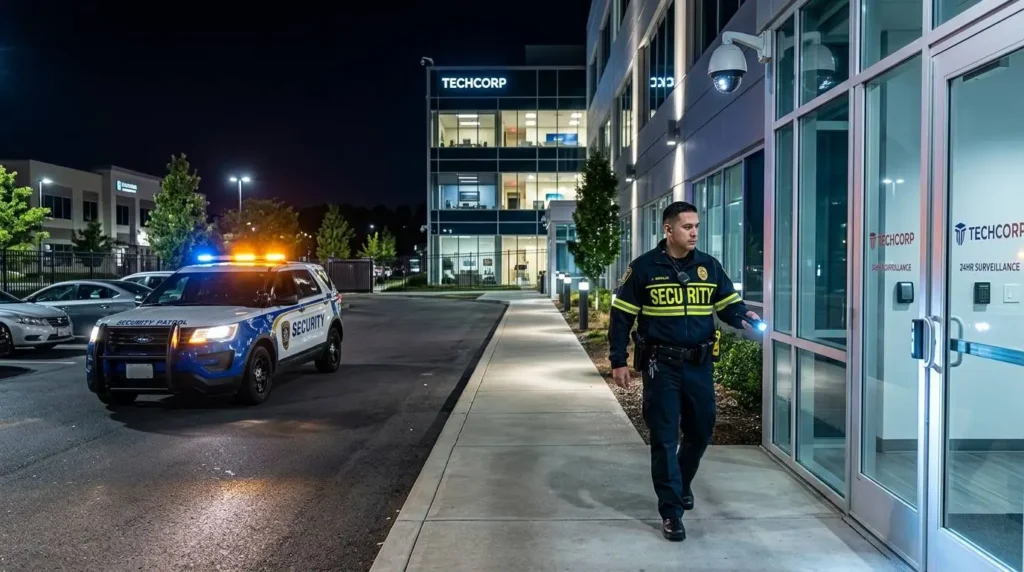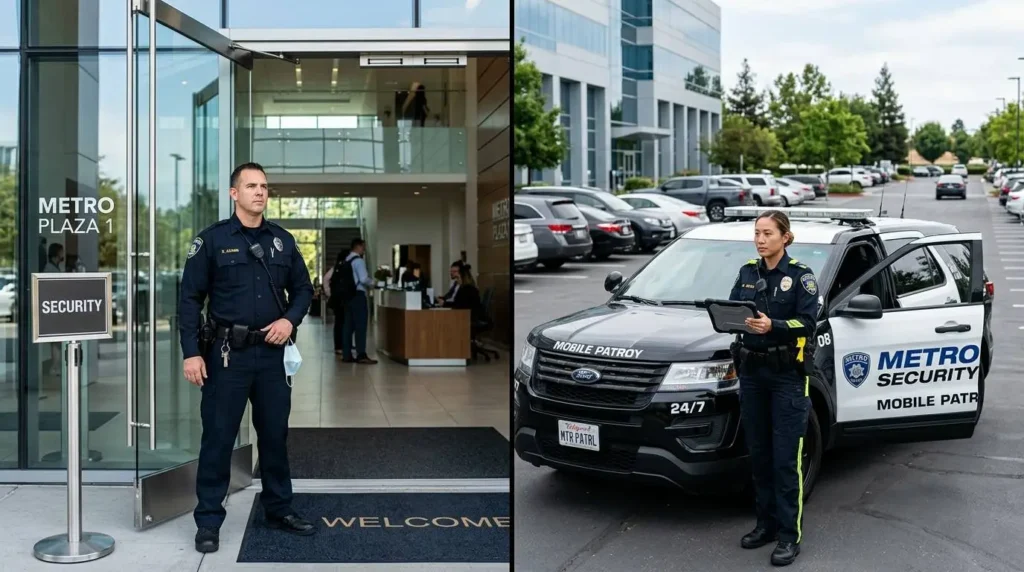
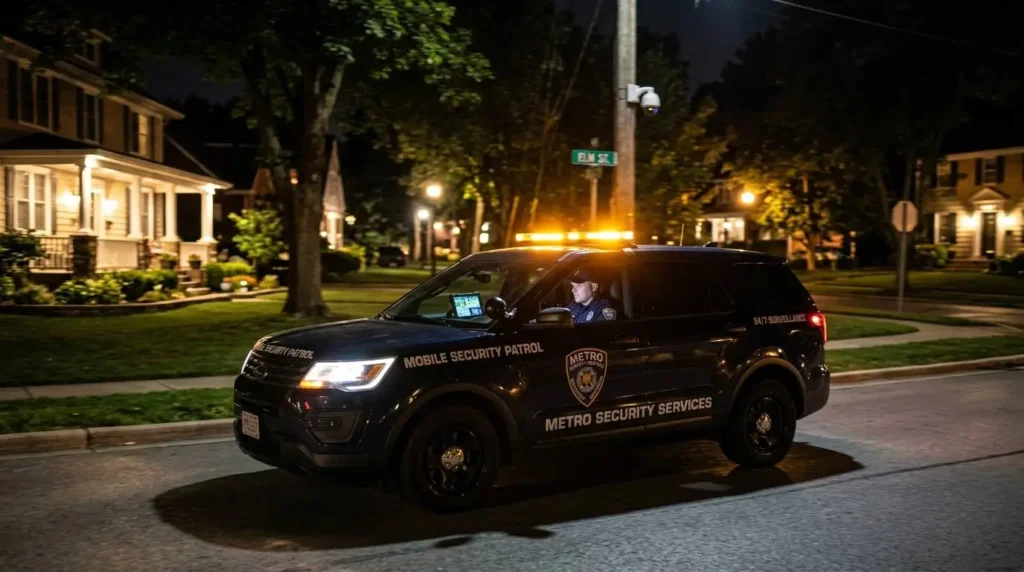
Crime doesn’t wait for business hours. Retail parks get hit overnight. Construction sites lose thousands in equipment before the crew arrives. Industrial estates face repeat break-ins that CCTV can never stop. The right response doesn’t sit still; it moves. This case study breaks down how mobile patrols stopped crime across three real property types, using unpredictable timing, visible officer presence and rapid alarm response.
The Local Crime Problem No Static Guard Could Solve
A static guard covers one point. A determined criminal simply watches the pattern and moves the moment the guard’s attention shifts. There’s no unpredictability. No uncertainty. Nothing to make an offender reconsider.
Mobile patrols change that calculation entirely. SIA-licensed officers in marked vehicles rotate across multiple sites at irregular intervals, making it impossible for anyone to confirm when a site is unguarded. That uncertainty is where crime prevention starts, before any officer sets foot on your property.
This is why how mobile patrols stopped crime in local areas is not a theory. It’s a measurable outcome across commercial, construction and industrial sites across the UK, and the three cases below show exactly what changed when site managers replaced predictable security with mobile patrol coverage.
How Mobile Patrols Stopped Crime Through Unpredictable Timing
Timing drives results. Cambridge University’s Institute of Criminology tracked patrol visits on London Underground platforms and found that four 15-minute patrols per day reduced reported crime by 28%, and 97% of that reduction happened during periods when officers were not physically present. Researchers named this the phantom effect.
Private mobile patrols operate on the same mechanism. When patrol vehicles visit a site at randomised intervals throughout the night, potential offenders can never confirm that the site is unguarded. The uncertainty alone suppresses criminal activity. MSS Security Patrols builds this directly into patrol scheduling, varying arrival times, extending or shortening patrol duration and avoiding any fixed routine that a watching criminal could exploit.
Understanding how mobile patrols stopped crime across different site types starts here: it is the unpredictability, not just the presence, that does the work.
Case Study 1 – Retail Car Park: Recurring Vandalism Eliminated
A retail business in the North West was experiencing weekly vehicle crime and vandalism across its car park. CCTV captured every incident clearly. It stopped none of them. Insurance costs were increasing month on month, and the business owner had already filed four claims in a single quarter.
MSS Security Patrols deployed mobile officers on weekday nights and weekend evenings, visiting the car park at four randomised intervals per shift. Officers logged every visit digitally with time-stamped photographs. On two occasions during the first deployment period, officers directly challenged individuals behaving suspiciously near parked vehicles. No arrests were needed; in both cases, the individuals left the site immediately.
Within the first four weeks, recorded incidents dropped to zero and remained there. No new insurance claims were filed. This is a direct example of how mobile patrols stopped crime at a property where passive surveillance had been running without effect for months. The difference was not technology. It was an officer making an offender uncertain about whether the site was being watched.
Case Study 2 – Construction Site: Tool Theft Reduced to Zero
Construction sites are among the highest-risk environments for overnight theft in the UK. Power tools, materials and plant equipment left on site overnight represent significant financial exposure with no natural deterrent once the workforce leaves. One residential development site manager had already reported two separate tool thefts and a missing cement mixer within six weeks of breaking ground.
MSS Security Patrols introduced Construction Site Security Services covering the full site perimeter at scheduled and unscheduled intervals between 10 pm and 6 am. Officers checked every access gate, storage container and scaffold point during each visit. No fixed arrival time was used.
Following patrol deployment, the site reported zero theft incidents across the remaining 14 weeks of the project. On two separate nights, patrol officers observed individuals approaching the perimeter fence. Both retreated upon spotting the marked patrol vehicle. How mobile patrols stopped crime on that site was not through confrontation; it was through the consistent message that the site was actively monitored and the risk of apprehension was real.
Case Study 3 – Industrial Estate: Overnight Break-Ins Stopped
An industrial estate with 12 units had suffered six confirmed or attempted break-ins in a single three-month period. Two units of stock. One had copper cabling stripped from the roof. The estate manager had upgraded CCTV across three of the units, but alarm monitoring response times averaged over 40 minutes, far too slow to prevent any loss.
MSS Security Patrols covered the estate on 90-minute rotational cycles throughout the night. Alarm activations were paired with Key Holding & Alarm Response Services, meaning patrol officers held site access keys and could respond to any triggered alarm without waiting for police availability or a keyholder to travel from home.
In the first month, two alarm activations were investigated. Both were confirmed as attempted break-ins. The patrol officer’s arrival within 12 minutes on each occasion caused the suspects to leave before entry was gained. Across the following three months, no further incidents were recorded. How mobile patrols stopped crime on this estate came down to one factor: response speed. Monitoring centres see the incident. Patrol officers stop it.
The Phantom Effect: Why Patrols Work Even When Officers Aren’t There
Most security content focuses on what happens when a patrol officer is present. The more important question is what happens after they leave.
The Cambridge criminology research referenced earlier makes this clear: offenders are influenced not by a patrol happening right now, but by their belief that one could happen at any moment. A marked vehicle visiting a site at unpredictable intervals plants that belief and keeps it alive throughout the night. Criminals move to sites they can rely on being unguarded. Yours stops being one of them.
How mobile patrols stopped crime in every case study above was not just about the moments of contact. It was about the uncertainty those contacts created between visits. That uncertainty works all night.
What MSS Security Patrols Does Differently in Your Area
MSS Security Patrols provides SIA-licensed mobile officers across local areas covering commercial properties, industrial sites, retail parks and residential developments. Every patrol visit is recorded digitally. Clients receive time-stamped reports after each visit, a full audit trail that supports both internal review and insurance documentation.
Officers are trained to identify site vulnerabilities during every visit: unsecured access points, damaged fencing, and suspicious vehicles left overnight. When an alarm activates, patrol officers respond directly. When a threat is confirmed, they document, escalate and coordinate with police without delays on your end.
This blog has shown how mobile patrols stopped crime across three different property types using the same consistent approach: randomised timing, fast alarm response and accurate incident reporting working together. That is what MSS Security Patrols delivers on every contract, every night.
Frequently Asked Questions
How do mobile patrols stop crime if officers are not always on site?
Offenders cannot confirm when a patrol will arrive. That uncertainty alone discourages criminal activity between visits, a pattern well-documented in UK criminological research on patrol deterrence. The unpredictability is the deterrent.
What types of property benefit most from mobile patrols?
Retail car parks, construction sites, industrial estates, vacant commercial buildings and warehouses all carry high overnight risk. Mobile patrols produce the strongest results at properties where CCTV or static monitoring has already failed to reduce incidents.
How does mobile patrol combine with alarm response?
When an alarm triggers, patrol officers who hold site access keys respond directly. This removes the delay of waiting for police attendance or a keyholder to travel from home. Officers investigate on arrival and escalate to police only when the situation requires it.
How often will patrol officers visit a site?
Visit frequency is agreed upon during the risk assessment and service setup. Randomised intervals are standard because fixed schedules give offenders the information they need to plan around your security.
Are MSS Security Patrol officers SIA licensed?
Yes. All patrol officers hold current SIA Security Guard licences and pass background vetting before deployment. MSS Security Patrols operates in full compliance with SIA licensing requirements across every contract.